Top stories of 2016
A year-end roundup of AtmosNews hits
Dec 22, 2016 - by Staff
Dec 22, 2016 - by Staff
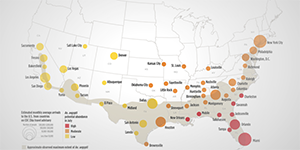
Zika risk estimated for U.S. citiesA multidisciplinary team of scientists studied the possible timing and location of Zika virus risk in the United States.
|
|
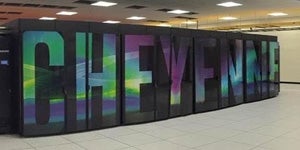
A powerful new supercomputerThe new system for the NCAR-Wyoming Supercomputing Center is capable of more than 2.5 times the amount of scientific computing performed by its predecessor. |
|
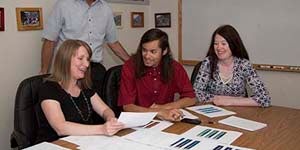
SOARS turns 20The SOARS Program has been boosting diversity in Earth system science for two decades. |
|
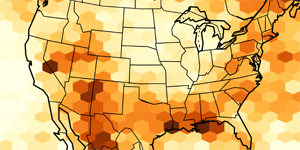
Extreme downpours could quintupleAt century's end, the number of summertime storms that produce extreme downpours could increase by more than 400 percent across parts of the United States. |
|
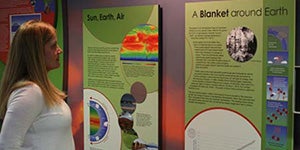
New NCAR climate exhibitThe exhibits at NCAR's Mesa Lab in Boulder provide the public with an engaging and scientifically accurate forum to learn about climate. |
|
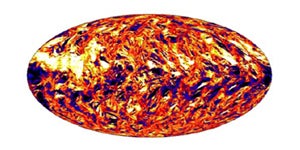
Solar model pulls order out of chaosPushing a solar model to the highest resolution ever attempted brings order back to the Sun's magnetic tangle. |
|
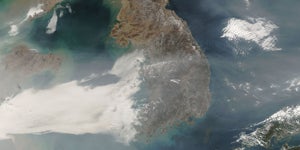
Investigating air quality in KoreaNCAR scientists traveled to South Korea as part of a field campaign to investigate the region's air quality. |
|
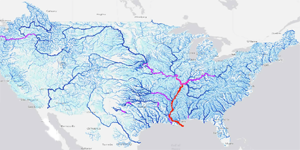
U.S. water forecasts tap NCAR modelNOAA is using an advanced NCAR prediction system as the core of the new National Water Model. |
|
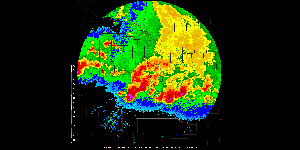
UCAR partners with AmazonUnidata has partnered with Amazon Web Services to make NEXRAD data from NOAA available in the cloud in near real time. |
|
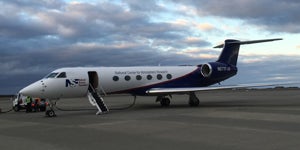
Flights investigate Southern OceanThe ORCAS field campaign is helping scientists better understand just how much carbon dioxide the icy waters are able to lock away. |
 |
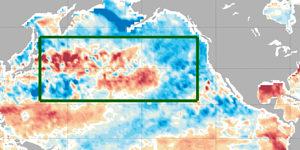
Ocean temps predict U.S. heat wavesThe formation of a distinct pattern of sea surface temperatures in the Pacific Ocean can predict an increased chance of summertime heat waves up to 50 days in advance. |
|
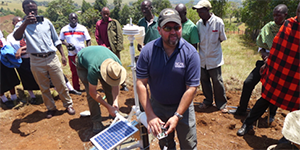
3D-printed weather stationsScientists successfully installed the first wave of low-cost weather stations in Zambia with 3D-printed parts. |
|
| Visualization of the year |
Researchers at NCAR and the University of Miami are seeking clues about what really goes on inside a tornado using highly detailed computer simulations of wind fields.