
NASA selects STRIVE explorer for next phase
NSF NCAR scientists contribute to mission aiming to provide comprehensive view of atmosphere
Feb 9, 2026 - by Audrey Merket
Feb 9, 2026 - by Audrey Merket
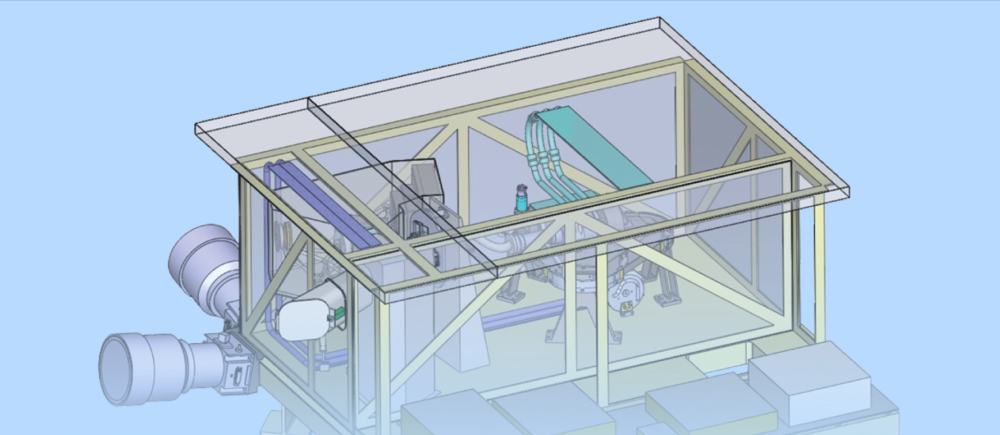
NSF NCAR researchers play an important role in STRIVE with responsibility for the retrieval algorithms and data processing for the ALICE imaging spectrometer pictured above.
| Impact Statement: The data collected by the two instruments on STRIVE will support longer-range weather forecasts, provide daily, near-global, high-resolution measurements of temperature, a variety of Earth’s atmospheric elements and aerosol properties at a much higher spatial density than any previous mission. |
NASA has selected The Stratosphere Troposphere Response using Infrared Vertically-resolved light Explorer (STRIVE) to move to the next phase of development. A team of researchers at the U.S. National Science Foundation National Center for Atmospheric Research (NSF NCAR) contributed to the project.
STRIVE is one of two next-generation satellite missions selected that will help NASA better understand Earth and improve capabilities to foresee environmental events and mitigate disasters. STRIVE will provide daily, near-global, high-resolution measurements of temperature, a variety of Earth’s atmospheric elements, and aerosol properties from the upper troposphere to the mesosphere – at a much higher spatial density than any previous mission. It also will measure vertical profiles of ozone and trace gasses needed to understand the recovery of the ozone layer. The data collected from STRIVE will support longer-range weather forecasts, an important tool in protecting coastal communities, where nearly half the world’s population lives.
The STRIVE mission is led by Lyatt Jaeglé at the University of Washington in Seattle. The team at NSF NCAR is led by David Edwards, senior scientist. Helen Worden, former deputy director of Atmospheric Chemistry Observations and Modeling and John Gille, senior scientist emeritus are both co-investigators on the project. NSF NCAR’s Atmospheric Chemistry Observations and Modeling (ACOM) lab plays an important role with the responsibility for the retrieval algorithms and data processing for the ALICE imaging spectrometer onboard STRIVE. The project builds on ACOM's long heritage and expertise in making observations of atmospheric composition and chemistry.
Read the full news release on NASA’s website.
Read the University of Washington news release on their website.
Learn more about STRIVE.