Super Science Saturday celebrates 30 years
Beloved annual event features hands-on activities and demonstrations at NSF NCAR Mesa Lab
Oct 26, 2026 - by Audrey Merket
Oct 26, 2026 - by Audrey Merket
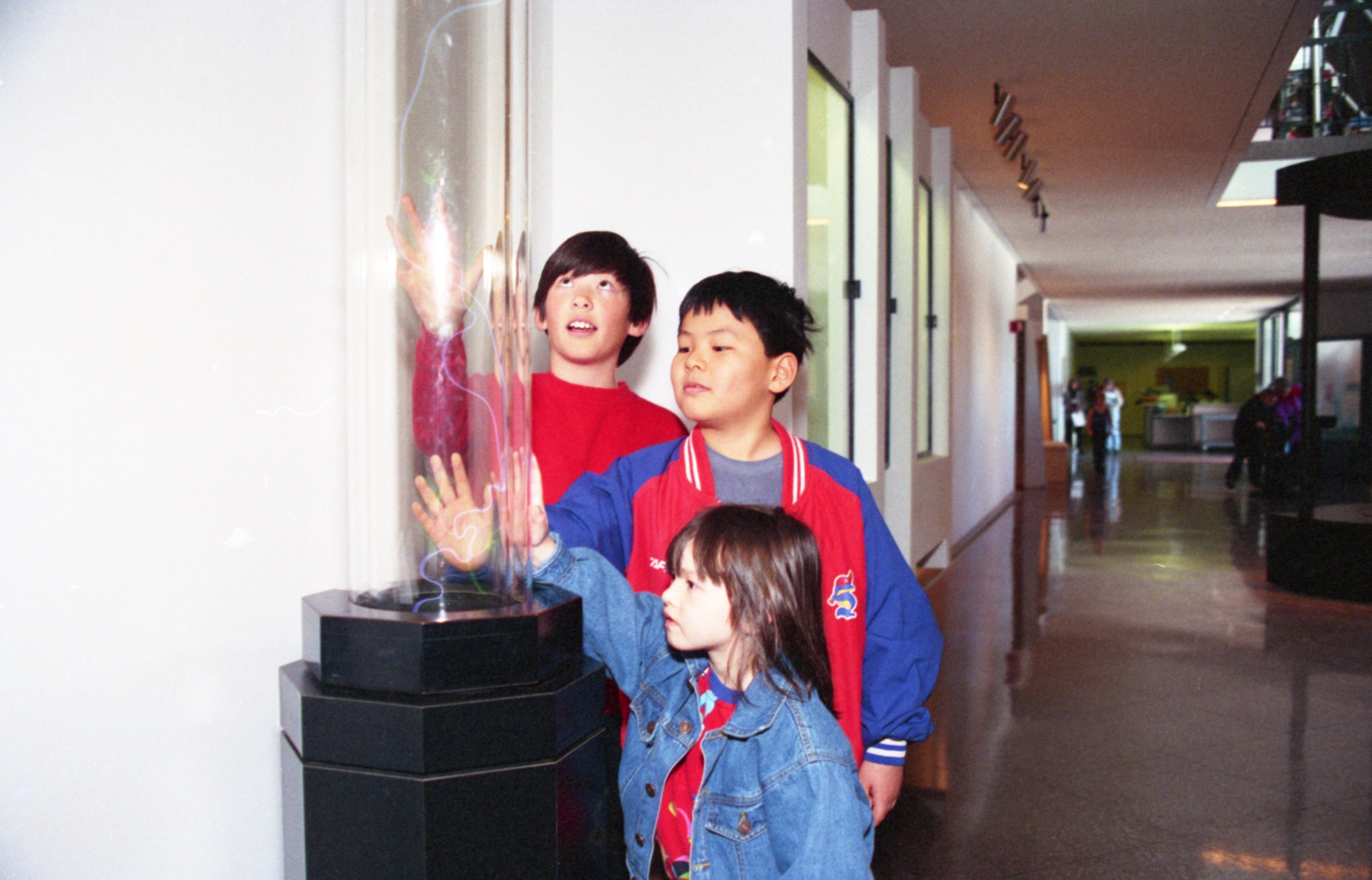
The first Super Science Saturday debuted in March 1996. Almost 800 attendees were at the inaugural event at the NSF NCAR Mesa Lab. Thirty years later, the event continues to draw hundreds of children and community members for this annual celebration of science. (Image: UCAR Archives)
In 1996 roller blades, beanie babies, and tamagotchis were all the rage. Kids in Boulder, Colorado, also had an additional thing to be excited about: the debut of Super Science Saturday. But unlike some ‘90s trends, Super Science Saturday has stood the test of time.
Rain, snow, or shine, Super Science Saturday has happened annually since 1996 – even pivoting to virtual celebrations during the pandemic. On Saturday, November 7, Super Science Saturday will celebrate its 30th anniversary with a space voyage theme: 30 years of going boldly. Families are invited to join the celebration at the U.S. National Science Foundation National Center for Atmospheric Research (NSF NCAR) Mesa Lab in Boulder from 10 a.m. to 4 p.m. for hands-on activities, demonstrations, and the NSF NCAR Wizard Show.
“Both staff and community members look forward to this event every year and we are so excited to celebrate this 30-year milestone with so many people who have supported Super Science Saturday over the years,” said Katie Wolfson, one of the event’s primary organizers. “While our demos and shows have changed over the last three decades, the one thing that has stayed the same is that this event is a blast for kids and adults alike.”
The event is organized by the UCAR Center for Science Education (UCAR SciEd) and co-sponsored by Friends of the National Center. UCAR is the University Corporation for Atmospheric Research, a nonprofit that provides education and research services and manages NSF NCAR under sponsorship by the National Science Foundation.
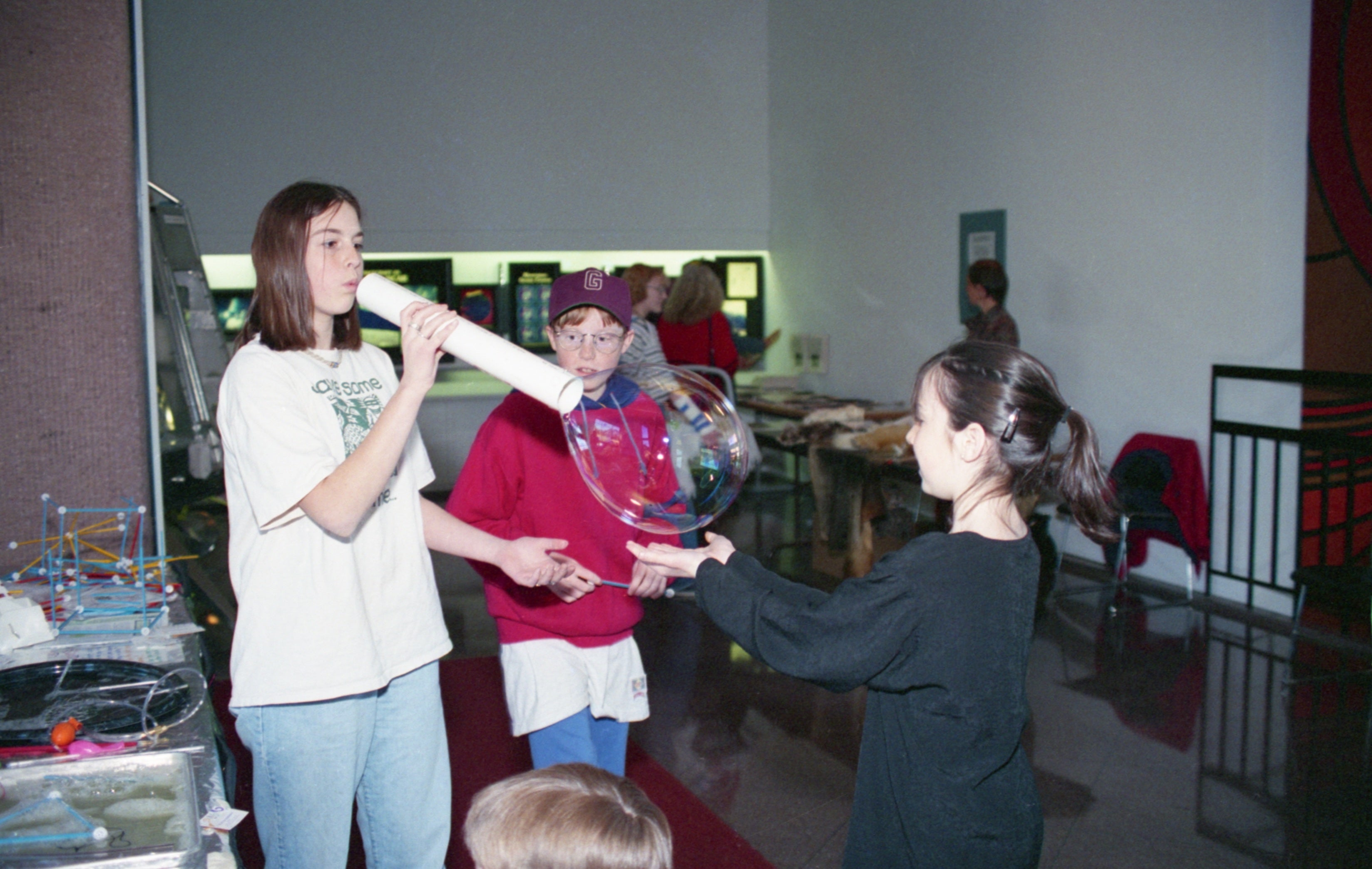
Before there was a Super Science Saturday, there was Patrick Kennedy. Kennedy grew up in rural Kentucky and viewed his position as a scientist at NSF NCAR as an opportunity to inspire school-aged children to develop a love of science. During his 25 years at NSF NCAR, Kennedy carried out hundreds of classroom visits and demonstrations, all of which were done in his personal time. He taught the fundamentals of physics and the atmosphere, but he did so in a vivid and entertaining way.
By the mid 1990s, science education was becoming an official priority at NSF NCAR and Linda Carbone, who coordinated the public exhibits at the Mesa Lab, and her staff were looking for ways to expose more students to science. Partially inspired by Kennedy’s demonstrations, they wondered what would happen if they had a whole day focused on showing children that science was “da bomb,” to borrow a ‘90s catchphrase.
The first Super Science Saturday debuted in March 1996 and was described in a message to staff as a “collaborative festival of hands-on learning and demonstrations” where students get a chance to explore scientific illustration, photography, computer graphics, and environmental clay painting. Kennedy sadly passed away a little over a month before the inaugural Super Science Saturday, but his method of introducing science to kids lived on in what would become known as NSF NCAR’s Wizard Shows.
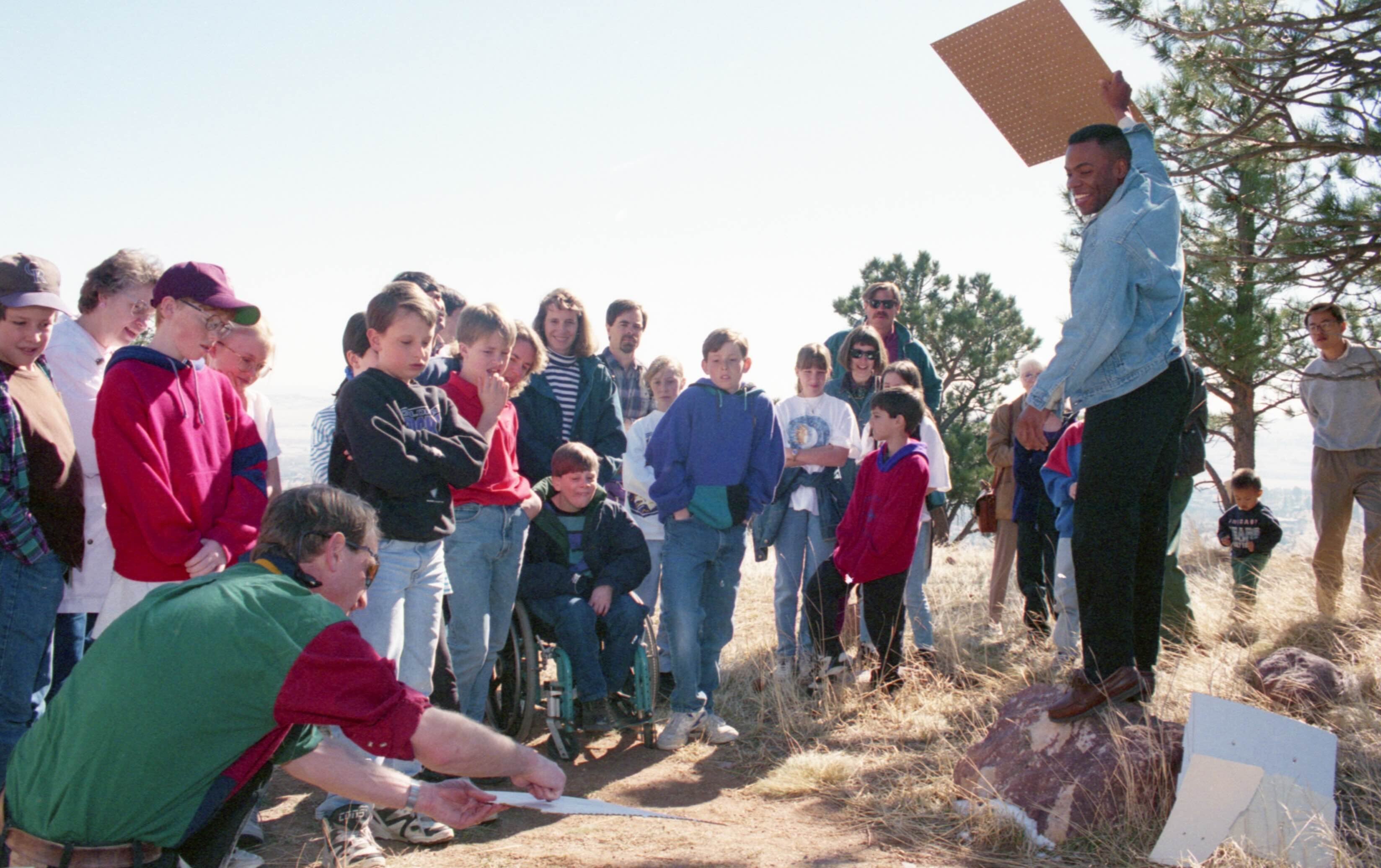
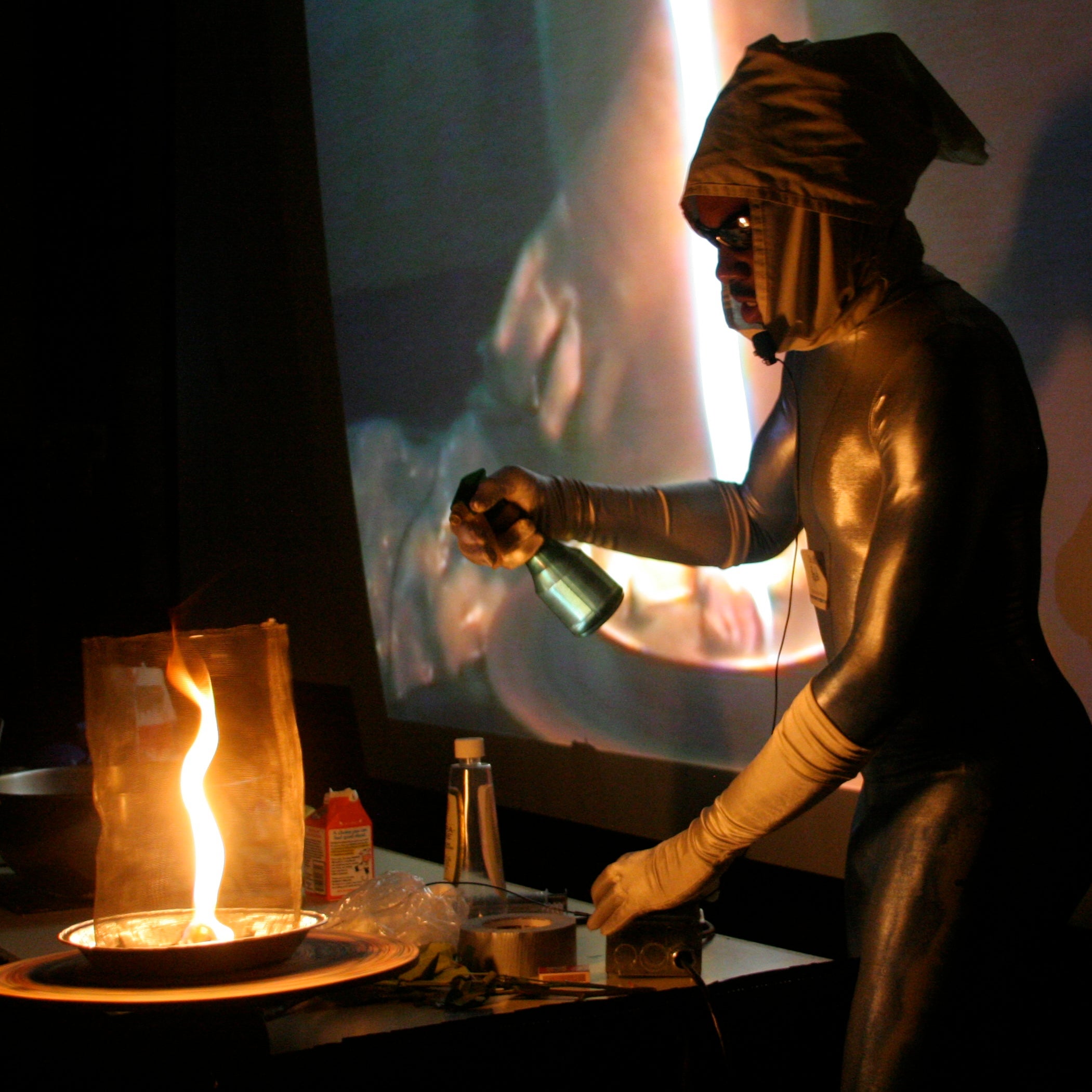
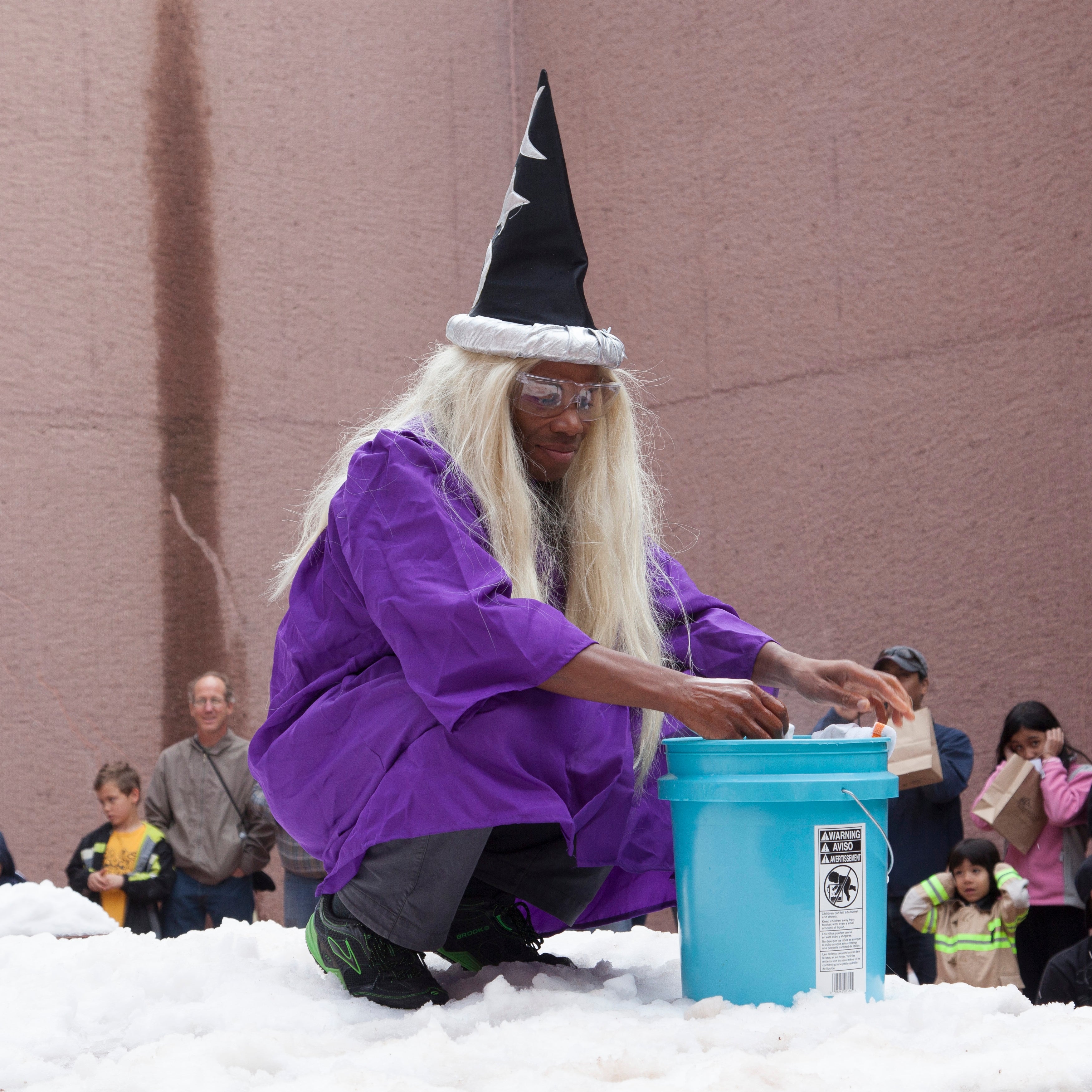
Tim Barnes, a UCAR SciEd outreach and training specialist, learned about science education from Kennedy and has led the science demonstrations at Super Science Saturday from the beginning. Originally, the demonstrations were called the Super Science Saturday Showcase, but as the demos became more organized and progressed from simple experiments to a scripted show, the scientists transformed into wizards.
“There’s a lot of mystery behind science and sometimes it seems like magic. We wanted to demystify it, but not by having scientists giving a lecture behind a desk,” said Barnes. “Our Wizards do wear lab coats, but they’re colorful and decorated with things like puffy clouds. It just feels a little more magical and approachable.”
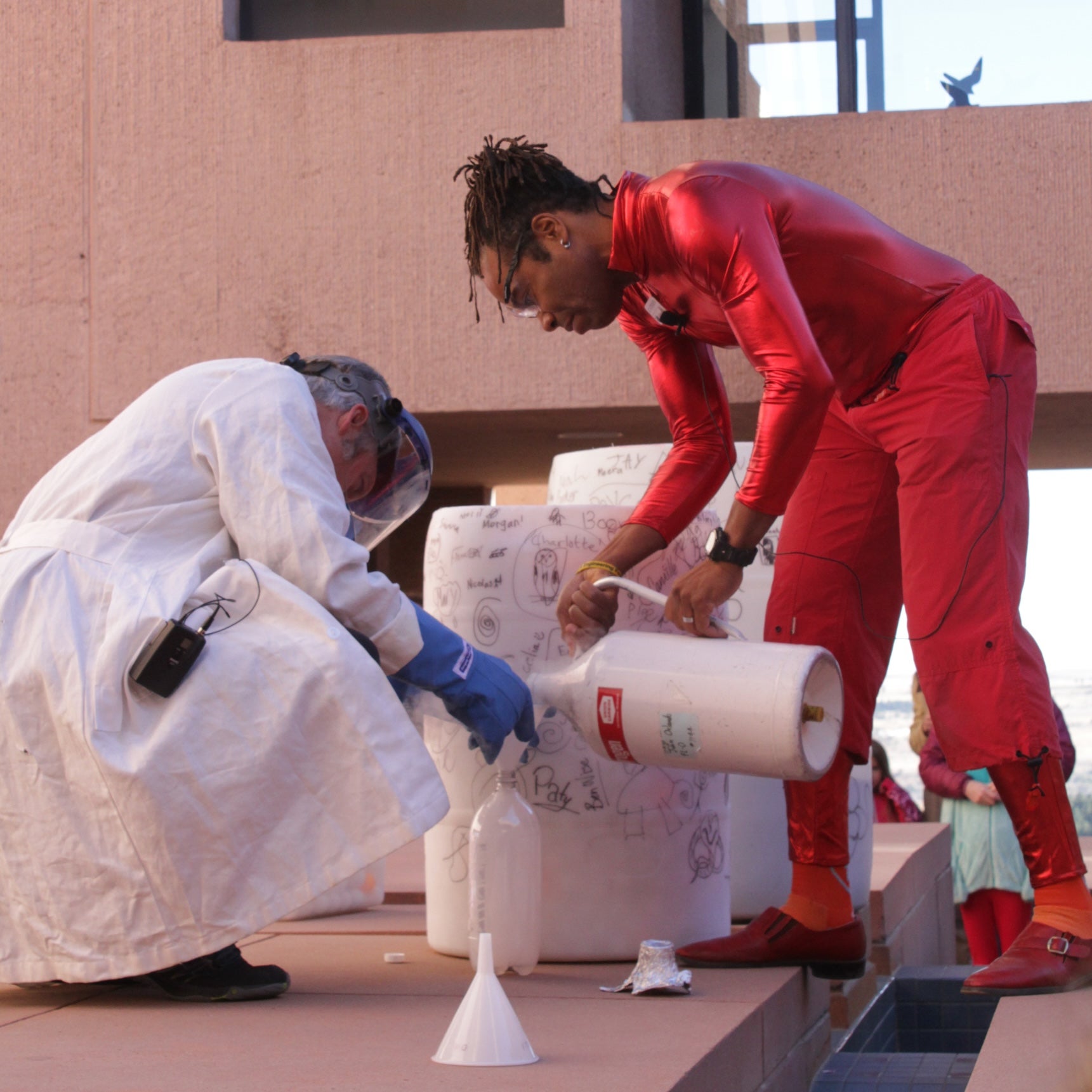
Over the years, the Wizards have perfected their method and learned from other science educators. The ping pong explosion, an experiment where a barrel full of ping pong balls explodes showering balls on the crowd, has become a staple finale of Super Science Saturday. The experiment was originally reverse engineered from a demonstration they’d seen famous STEM educator Steve Spangler do. Spangler kept some of the details of the trick a secret though, so the Wizards had to figure out details like how much liquid nitrogen they needed to use to make the experiment work.
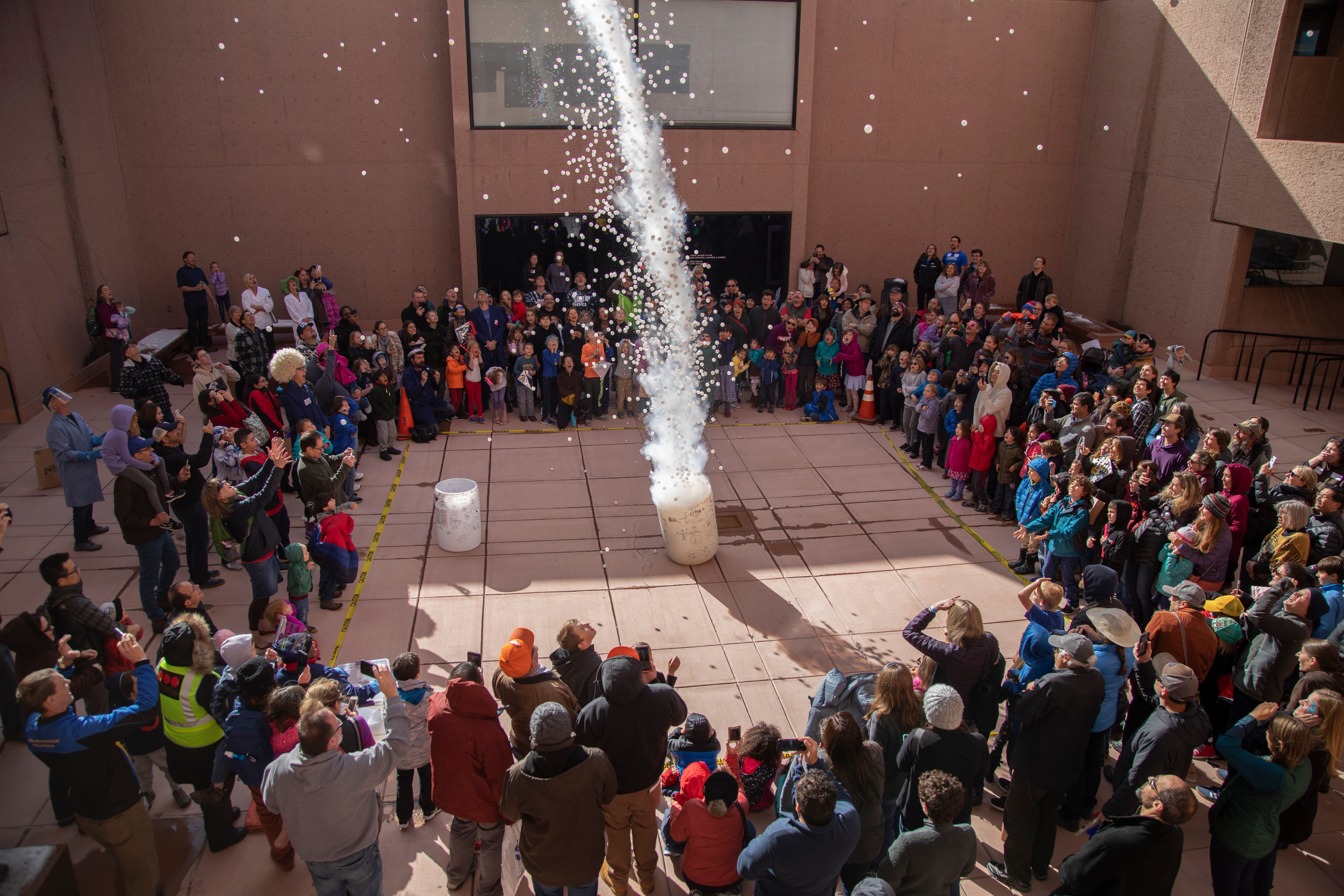
Barnes originally tested the experiment using packing peanuts instead of ping pong balls. The first try took place in the loading dock at the NSF NCAR Mesa Lab. At first it didn’t seem like the explosive reaction was going to happen. After waiting over 15 minutes, Barnes was about to give up, but then the lid of the barrel blew off with a loud boom, showering him in shredded packing peanuts. It took awhile to vacuum up all the packing peanut remnants with a shop vac, but that gave Barnes plenty of time to think about the set-up and how securing the lid tighter might be the secret to the experiment working correctly.
“The Wizard shows are a bit of trial and error. We still learn something every time we try out a new experiment, which is a reminder to those of us who have been at this for a long time that science is a discovery process,” said Barnes. “I’ll also add that safety teams often get a reputation for ruining the fun, but our Health, Environment, & Safety Services team has been critical in introducing new and exciting experiments. Every time we come up with a new wild idea, they don’t just shut it down, but help us think through how we can make it happen in a meaningful and safe way.”
Super Science Saturday typically has a theme like “science with a blast” or “science quest” that guides the activities. Costumes that match the theme are not uncommon for both attendees and volunteers. Over the years, the event has featured a range of activities from face painting to weather balloon launches, photography workshops, light shows, and tutorials on how to surf the web to find weather data. The thing that has stayed consistent across all the themes and decades though is the fun.
“‘When we do the wizard shows, we’re up there making fools of ourselves and sometimes we make mistakes, but I hope that makes science more accessible,’” said NSF NCAR software engineer Janine Aquino, one of the original Wizards who you can still see perform at this year’s event. “The Wizard Show is less about teaching something specific. We want people to leave the show thinking, ‘I didn’t learn enough. I want to go learn more.’”
|
|
|
What: Super Science Saturday
When: Saturday, Nov. 7 from 10 a.m. to 4 p.m.
Where: NSF NCAR Mesa Lab, 1850 Table Mesa Drive, Boulder, CO
Who: Activities for the entire family, with events especially focused on children ages 4 to 12
Cost: Free
In the event that the parking reaches capacity at this popular event, cars will be allowed in on a one-car-in, one-car-out basis. The planning team encourages visitors to carpool, bike, or hike to the event. Please plan accordingly.
More Information: https://scied.ucar.edu/visit/ncar/super-science-saturday