Climate advocacy and a look ahead: UCAR’s strong voice in national climate activities
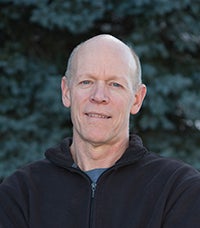
Jack Fellows, UCAR Vice President for Corporate Affairs and UCP Director
Mar 26, 2010 - by Staff
Mar 26, 2010 - by Staff
April 6, 2010 | To quote Charles Dickens, “It was the best of times, it was the worst of times, it was the age of wisdom, it was the age of foolishness, it was the epoch of belief, it was the epoch of incredulity, it was the season of Light, it was the season of Darkness….”
If I could pick some words to describe today’s complex world of climate research, policy, and advocacy, I’m not sure I could pick any better than these famous words from 1859. The science surrounding climate change has never been more rigorous and exciting and there has probably never been a time when the science community was more poised to help on this important issue. While national climate adaptation and mitigation politics plod slowly along, many of America’s cities are making great strides to plan for a changing climate and doing it in a way that makes sense regardless of the exact scale of changes (for example, adopting policies and programs that reduce dependence on oil, conserve water, increase energy efficiency, and generally make communities nicer places to live).
Yet, while other countries understand the importance of this issue, a recent survey by the Pew Research Center for People & the Press shows that today even fewer U.S. citizens than just a year ago believe that climate change is a serious issue. When you look at countries such as Australia, where 80–90% of citizens believes this is a very serious issue and the country is taking inspirational and concrete actions to deal with a changing climate, you have to wonder why we aren’t getting it. The short answer is politics and special interests, the Climategate controversy over stolen climate researcher e-mail messages, and the surprisingly widespread belief that a single cold winter is proof that global warming is not real.
To me, regardless of where you stand on this issue, it is important to talk about it and it is unfortunate that politics are standing in the way of a constructive and important national conversation. That said, I want to tell you what UCAR is doing to move the various groups toward a more constructive climate change conversation.
Each year the UCAR member universities get together to discuss corporate and community issues. For the past two years, we have discussed the role NCAR and the UCAR universities could play in making our nation more resilient to climate change and associated severe weather, in particular how to help local decision makers ensure that their communities will have reliable access to water, food, energy, and health resources and services in the face of a changing climate. The number of UCAR universities partnered with cities has continued to increase. Last year UCAR Magazine highlighted the fascinating partnerships, particularly with New York City and Chicago, that were discussed at the 2009 UCAR Annual Meetings.
Our ultimate goal for this community discussion was to be able to eventually offer this network of partnerships as a key part of a national climate service. This effort included leading the development of a transition document that provided recommendations to the incoming Obama administration and 110th Congress on how to make our nation more resilient to climate change and soliciting community nominations for key weather and climate positions in the new administration.
This transition document has been a very effective advocacy tool, but these efforts haven’t stopped. Based on this document and many other interactions, the President’s Science Advisor asked UCAR to convene a National Climate Adaptation Summit this spring in Washington, D.C. This invitational summit will bring together approximately 150 invited users and providers of climate adaptation information from diverse climatological regions and economic sectors. They’ll provide insight into what is needed for effective climate adaptation and vulnerability assessment and how we should be organized to do that, in both the public and private sectors and from federal to local levels. These insights will be incorporated into a broad range of federal climate adaptation planning efforts, including for the White House Climate Adaptation Task Force and the U.S. Global Change Research Program.
Through these and other advocacy efforts, UCAR has become a sought-after voice on climate research, education, and policy matters. Our plans for the future include holding a community conversation on what it will take to develop the next generation's environmental leaders and workforce who can effectively work on these climate research and adaptation issues and explore the development of a public and private sector–based Colorado Climate Service that could be a prototype climate service for the country. So, although it may be a confusing political time for climate change, rest assured that our community is making a substantial difference in this debate. We’ll keep you posted as things develop.