
GLOBE celebrates 15th anniversary: Program aims to connect with 21st century students
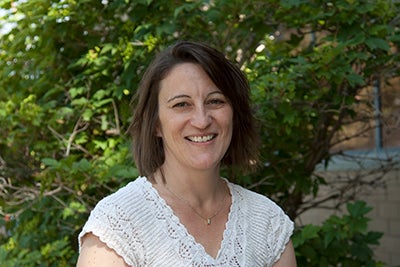
Donna Charlevoix, GLOBE Director of Science & Education
Jul 27, 2010 - by Staff
Jul 27, 2010 - by Staff
August 2, 2010 | I hate to admit this, but when I first learned of the GLOBE Program (Global Learning and Observations to Benefit the Environment), I was not certain exactly what it was. As I encounter many of you throughout NCAR and UCAR, I hear a similar refrain: “I’ve heard of GLOBE but I’m not sure I understand what it is.” During the past year, I have come to learn much about the GLOBE Program and have discovered that it is a secret gem. Our goal in the GLOBE Program Office here at UCAR during the coming year is to make this a widely known gem.
The GLOBE Program aims to help students explore the environment from a scientific perspective. For fifteen years, students from around the world have been collecting environmental data and entering it into the GLOBE database. To date, they’ve recorded almost 21 million bits of data! These data are used for student-generated inquiry and research. Scientists use the data for ground-truthing satellites and as supplemental data sets. Students, working with scientists, explore the Earth system and learn about their local environments.
The GLOBE Program just celebrated our 15th anniversary with the release of a program review from the White House’s Office of Science and Technology Policy praising the contributions GLOBE has made to science and education and indicating that the program has a bright future ahead. We are at an exciting time in the program’s history. We have a long and distinguished history of helping students connect with each other and with scientists.
I, and others within GLOBE, strongly believe that students are inherently curious and motivated to engage in science discovery if they can see the relevance to their world. At GLOBE, we are modernizing ourselves for the 21st century, integrating the technologies that are so ubiquitous in students’ lives. When GLOBE was first launched in 1995, it featured GLOBE Mail—one of the first international email networks, connecting teachers from around the world with each other. New, 21st century technologies—social networking, Google Earth and Google Maps, mobile device data collection and entry—are necessary to meet them halfway into their worlds and to engage students in understanding the role technology plays in science and how it is not so different from what they experience in their everyday lives.
GLOBE’s goal is to leverage cutting-edge technologies to help facilitate student-scientist interactions, furthering scientific knowledge and continuing to excite students about the future of science. We as scientists and role models have a responsibility to sometimes move out of our comfort zones and into those of the younger generation to help it appreciate the value of scientific exploration. In return, we often learn more from the students than we expect about how their generation perceives the current world and what their outlook for the future is.
GLOBE is preparing to focus on helping students explore climate through research, with students working side by side with scientists. Students will explore local climate questions through data collection and analysis and interaction with climate scientists. We in the GLOBE Program Office have heard from the worldwide GLOBE community that students want to learn more about climate and they are motivated by interactions with scientists. Students want to address climate issues of local relevance to them, their schools, and their communities.
Without fail, when talking to GLOBE teachers and students, they cite the opportunity to interact and work with scientists as one of the most motivating aspects of exploring science through GLOBE. Students from around the world are inspired by scientists—such as the distinguished group of researchers here at NCAR. As we develop our GLOBE International Scientist Network, I hope that many of you will join us in engaging youth to better understand climate and, in return, be reminded of the very reason we explore climate and Earth system science—to make the world a better place for future generations.