
Communicating science in a changing media landscape: UCAR/NCAR community ready to engage
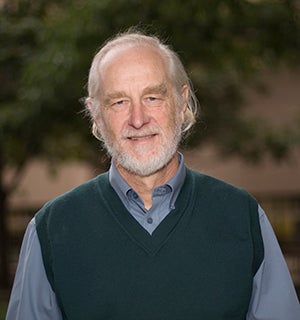
Greg Holland, Director, NCAR Earth System Laboratory
Sep 28, 2010 - by Staff
Sep 28, 2010 - by Staff
October 4, 2010 | We are in an era of rapidly changing communications media, which is driving a major evolution in the modes of communicating science. In the past, a mainstay of scientific communication in popular media was through science “translators”—science journalists and presenters. These have now nearly disappeared and are being replaced by widespread dissemination of information through the Internet, including blogs, YouTube, and social networking, as well as by journalists who often have little scientific background and sharp deadlines.
Thus, scientists and science organizations are required to assume increasing responsibility for translating our scientific findings and calibrating our communications to nontechnical audiences, a task for which we are often ill prepared. And this is compounded for controversial societal issues such as tobacco, evolution, and most recently, climate change—issues that are also prone to being politicized and hijacked by ideological belief systems to the detriment of constructive dialogue.
Perhaps not surprisingly, the need to accurately communicate weather and climate science is high on the community agenda: it is the theme of the 2010 UCAR Members’ Meeting and the 2011 meeting of the American Meteorological Society, and it will be discussed in several sessions and workshops at the fall meeting of the American Geophysical Union. Over the past several months, a group of UCAR/NCAR staff and external collaborators has been examining the issue of communicating science through a series of workshops and detailed discussions. Our goals are to develop new approaches to science communication and to equip present and future scientists with the requisite skills.
If we start from a sound scientific finding with general scientific consensus, such as the warming of the planet by greenhouse gases, then the primary emphasis moves from the “science” to the “art” of communication. The art cannot have free rein, however, as there remains a strong requirement for objectivity, honesty, consistency, and above all, a resistance to advocating particular policy positions.
Logical and dispassionate presentation of evidence works for a target scientific audience, and most scientists are excellent communicators to their peers. But these qualities can become liabilities when communicating to a nonscientific audience where entertainment, attention grabbing, 10-second sound bites, and self-assuredness reign.
Major societal decisions from the policy to the personal level are influenced by many factors, including immediacy, economics, culture, community leaders, emotional framing, and ideological filters. One approach of considerable merit, therefore, is to target specific social groups by utilizing their own communication channels and peer groups and by translating scientific messages into familiar terms that are consistent with the group’s attitudes and beliefs. My view is that this will substantially improve the impact of the scientific message. It does require effort, particularly specialists who can develop an understanding of an audience and repackage messages to their perspective.
For UCAR/NCAR, the next step in the investigative process is a gathering on October 21–22, with a group of invited communicators discussing and helping finalize a white paper outlining future action. This will include town hall meetings that all are welcome to attend.
The way ahead is not an easy one. It requires a cultural change amongst scientists and science organizations to enable accurate, but relevant, translation of the message in a manner suitable for target audiences and the new generation of instant messages. Nevertheless, it is a path that we have to take, and my view is that it will be to the ultimate benefit of the science.