Fire and water down under
Apr 7, 2009 - by Staff
Apr 7, 2009 - by Staff

Greg Holland
April 7, 2009 | Greg Holland
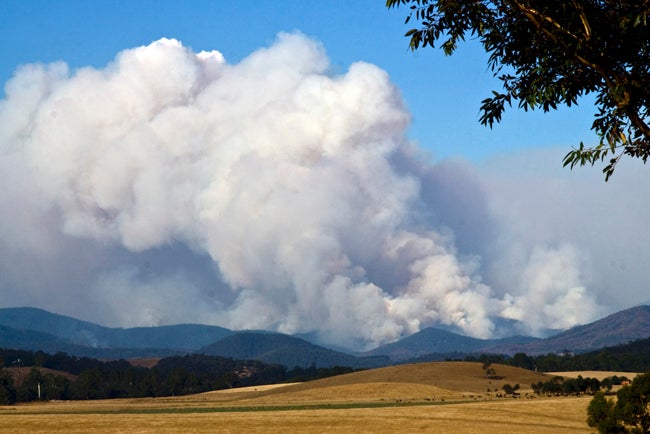
(ESSL/MMM) took this photo (below) of the devastating February
wildfires in Australia. This particular fire threatened his son’s farm
near Healesville, about 50 miles northeast of Melbourne.
Scientists stress that no one drought or wildfire can be
attributed to global warming; however, the eucalyptus forests and farms
of southeastern Australia are becoming drier and more fire prone as the
planet warms. The 2007 IPCC report warned that fires in Australia were
expected to increase in intensity and frequency.
The upcoming Year of Tropical Convection
(YOTC) may help forecasters better predict conditions that create such
infernos. YOTC’s goal is to study the massive clusters of showers and
thunderstorms that regularly prowl Earth’s low latitudes and influence
weather elsewhere. While parts of Victoria, Australia, experienced
severe drought and record high temperatures that stoked wildfires,
Queensland was dealing with floods that inundated an area larger than
Texas.
According to Mitch Moncrieff (ESSL/MMM), who’s helping
organize YOTC, these events may be connected. An organized cluster of
convection called the Madden-Julian Oscillation (MJO)
pushed southward from Indonesia into northern Australia over several
weeks in January after gathering strength in the Indian Ocean. Weather
systems spawned by the slow moving MJO not only brought heavy rains to
Queensland, but may have helped induce drying and subsidence on its
southern flank, including around the Melbourne area.