
New fiscal year brings ESSL restructure, management shifts
Oct 12, 2009 - by Staff
Oct 12, 2009 - by Staff
October 12, 2009 | Three months ago, NCAR director Eric Barron challenged the
nearly 300 NCAR staff who have been part of the Earth & Sun Systems
Laboratory (ESSL) to define a new laboratory structure that would better enable
NCAR science and improve management while maintaining the ability to foster
interdisciplinary science.
Eric announced on September 29 that several changes to ESSL
would occur starting on October 1. NCAR will maintain the identity of its
divisions, but the structure of ESSL has been modified. Three of ESSL's four
divisions (MMM, CGD, and ACD) will define a laboratory, yet to be named,
focused on the Earth system and characterized by a coherent budget, personnel,
and planning structure. HAO now reports directly to the NCAR director as a
separate unit.
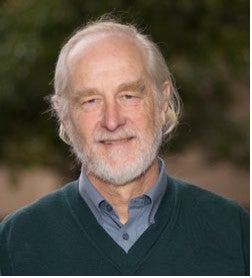 Greg Holland, interim director of the new NCAR laboratory replacing ESSL.
ESSL was formed in 2004 to help foster more
interdisciplinary work among NCAR's traditional science divisions. However,
there were persistent tensions between that goal and the budget and management challenges
accompanying a new layer of administration. In his e-mail to ESSL staff, Eric
noted "a profound difference of opinion" on how best to restructure ESSL, with
many scientists and managers weighing in. A particular challenge, Eric said,
was finding a way to maintain the culture of the original divisions without
jeopardizing the moves toward interdisciplinary science that ESSL had fostered.
"It is my judgment," said Eric, "that NCAR is best served by
a lab that focuses on the Earth system, based on a coherent budget and
personnel system, while maintaining the strong programs and scientific
leadership embodied in its three divisions."
Greg Holland will serve as interim director for the new lab
for the next year. Rich Rotunno will be replacing Greg as MMM director. The
executive group for the new lab includes Greg, Rich, ACD director Bill Randel,
CGD director Bill Large, and Mike Moran, who will stay on from ESSL to serve as
administrator for the new lab. This group is now gathering input and fleshing
out the new lab's structure.
"We expect it to take at least a year before everything is
stable," says Greg. "I don't want to rush. As we make each decision, we want to
make it properly." Greg says that the new lab will be responsible for the
strategic planning, budgeting, and large-scale management activities, although
he emphasized that there were many details yet to be worked out.
Among other staff in the former ESSL office, NCAR associate
director Guy Brasseur is now based in Hamburg, directing the new Climate
Service Center within Germany's GKSS-Forschungszentrum Geesthacht. While there,
he retains a quarter-time appointment as an ACD senior scientist. Annick Pouquet
also remains an NCAR senior scientist. ESSL executive assistant Barb Petruzzi
is now supporting the ACD directorate.
Other news from the divisions and labs
Michael Knölker has
stepped down from the HAO directorship after 14 years. His tenure and
accomplishments were toasted at a gathering on September 25 at Center Green. Now
on a year-long sabbatical that will include visits to several institutions in
Germany, the Canary Islands, and the United States, Michael continues as a
senior scientist in HAO. Stan Solomon is serving as acting HAO director while a
search is under way for Michael's replacement.
Several new deputy directors have been appointed across NCAR
in the last few months. Long-time MMM scientist Chris Davis will serve as that
division's deputy, while Sue Schauffler has moved from her former role as ACD
deputy to take the same post in EOL (her ACD position has yet to be filled).
Keith MacGregor replaces Stan as the new HAO deputy. And in CISL, Anke Kamrath,
a new arrival from the San Diego Supercomputing Center, follows the recently
retired Tom Bettge as director of operations and services.
With the restructuring of ESSL, there are now seven units
reporting to the NCAR director, with their leadership serving as members of the
NCAR Executive Council:
•The new Earth system lab, incorporating CGD, MMM, and ACD, to be named in the
next few weeks (234 employees, excluding visitors and casual employees)
•RAL (202 staff)
•EOL (147 staff)
•CISL (147 staff)
•HAO (53 staff)
In addition, ASP hosts 37 postdoctoral fellows and graduate
visitors placed around the institution, and the new Integrated Study Program
(ISP) works with NCAR labs to promote a range of interdisciplinary efforts that
extend the strengths of NCAR core programs.