
Severe weather preparedness project LAUNCHes at Louisiana State University
NSF NCAR and UCAR researchers collaborate on project focused on building resilience in the Gulf Coast
Jun 30, 2026 - by Audrey Merket
Jun 30, 2026 - by Audrey Merket
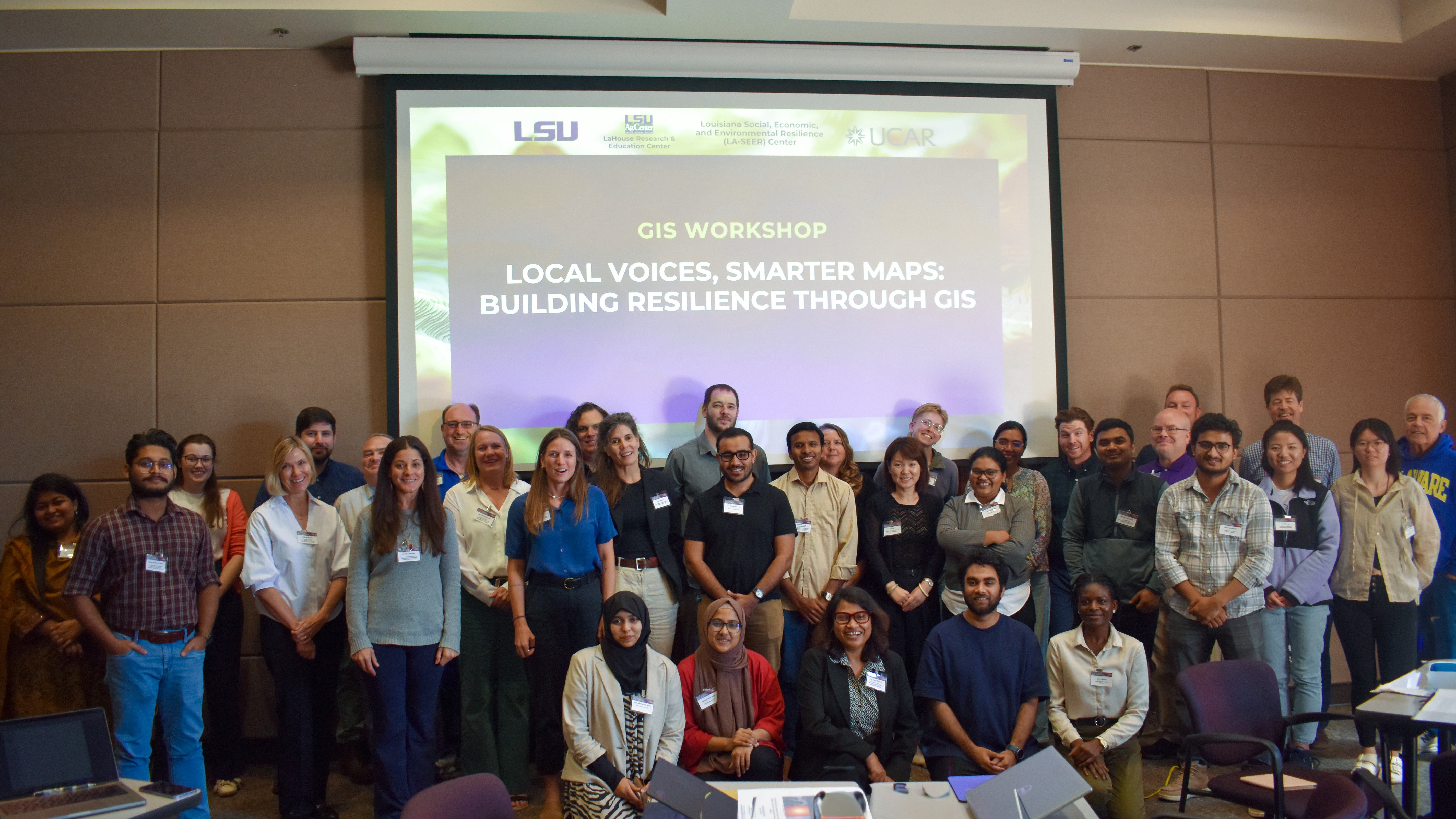
Attendees at the GIS workshop. Through a series of three workshops, LAUNCH brought together researchers, policymakers, teachers, college students, and community organization members to address the impacts of natural hazards on lives and property in coastal regions of Louisiana.
Over the last year, researchers at the U.S. National Science Foundation National Center for Atmospheric Research (NSF NCAR) and Louisiana State University (LSU) partnered on a project to enhance disaster preparedness, mitigation, and resilience to weather hazards in the Gulf Coast – an area that is vulnerable to multiple types of severe weather including hurricanes, flooding, and extreme heat.
The project is called Louisiana Actionable Understanding for Natural Hazard Preparedness, or LAUNCH. LAUNCH aims to foster interdisciplinary partnerships, enhance public understanding of Earth system science, and address the specific resilience needs of Gulf Coast communities.
Through a series of three workshops, the initiative brought together researchers, policymakers, teachers, college students, and community organization members to address the impacts of natural hazards on lives and property in coastal regions of Louisiana. To better understand, communicate, and prepare for these natural hazards, NSF NCAR researchers introduced attendees, including regional water resource managers and emergency preparedness professionals, to advanced hazard mapping platforms and flood risk tools available through NSF NCAR. This included tutorials on how to use Geographic Information System (GIS) tools and the WRF-Hydro Modeling System.
Science educators from the University Corporation for Atmospheric Research (UCAR) Center for Science Education also participated by providing K-12 teachers from urban New Orleans and rural coastal communities with resources and information to develop curricula about hurricanes.
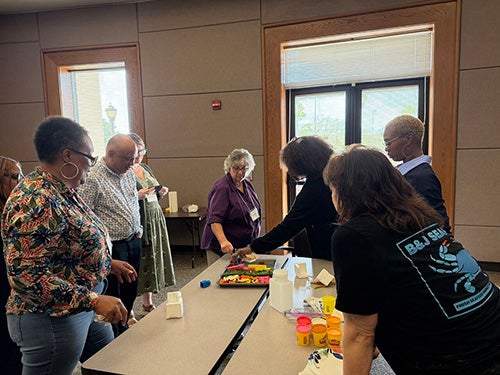
Facilitating education at all levels will help community members of all ages better understand early warnings and weather predictions. Additionally, by convening so many different stakeholder groups, the LAUNCH initiative fostered interdisciplinary collaboration and helped bridge the gap between cutting-edge scientific research and community needs.
“As important as the demonstrations of technology are, the workshops carry another equally vital benefit: providing scientists, officials, and community members a shared language for talking about risk,” said Nazla Bushra, an assistant professor at the Louisiana Office of State Climatology and at LSU who leads the LAUNCH initiative. “Relationships and communication are a strong component of community resilience and these workshops are a starting point for getting all voices to the table.”
The LAUNCH workshops also introduced participants to training and workforce development opportunities provided by NSF NCAR and UCAR – the organization that manages NSF NCAR. Because of conversations that started at the workshops, numerous collaborations were stimulated, four LSU faculty members applied for and secured research grants, and three graduate students earned summer internship opportunities.
“While a big part of this project was introducing people to NSF NCAR tools that can support research that protects lives and property, it was also a learning experience for us too,” said Thomas Hopson, an NSF NCAR scientist who helped plan the workshops. “By interacting with university researchers and community members, we made connections we never would have made. Opportunities like LAUNCH really allow us to take research out of the lab and into the real world.”
The LAUNCH workshops were funded by the UCAR President’s Advisory Committee on University Relations (PACUR) community engagement fund. The fund was created by the UCAR President's Office, with the goal of building and extending the UCAR Earth system science community of researchers, faculty, teachers, students of all levels, and the general public. To learn more, visit the PACUR community engagement fund website.