
Prepare for takeoff into smoother skies
Tool developed at NSF NCAR enables pilots to reroute around turbulence in real time
Sep 10, 2026 - by Audrey Merket
Sep 10, 2026 - by Audrey Merket
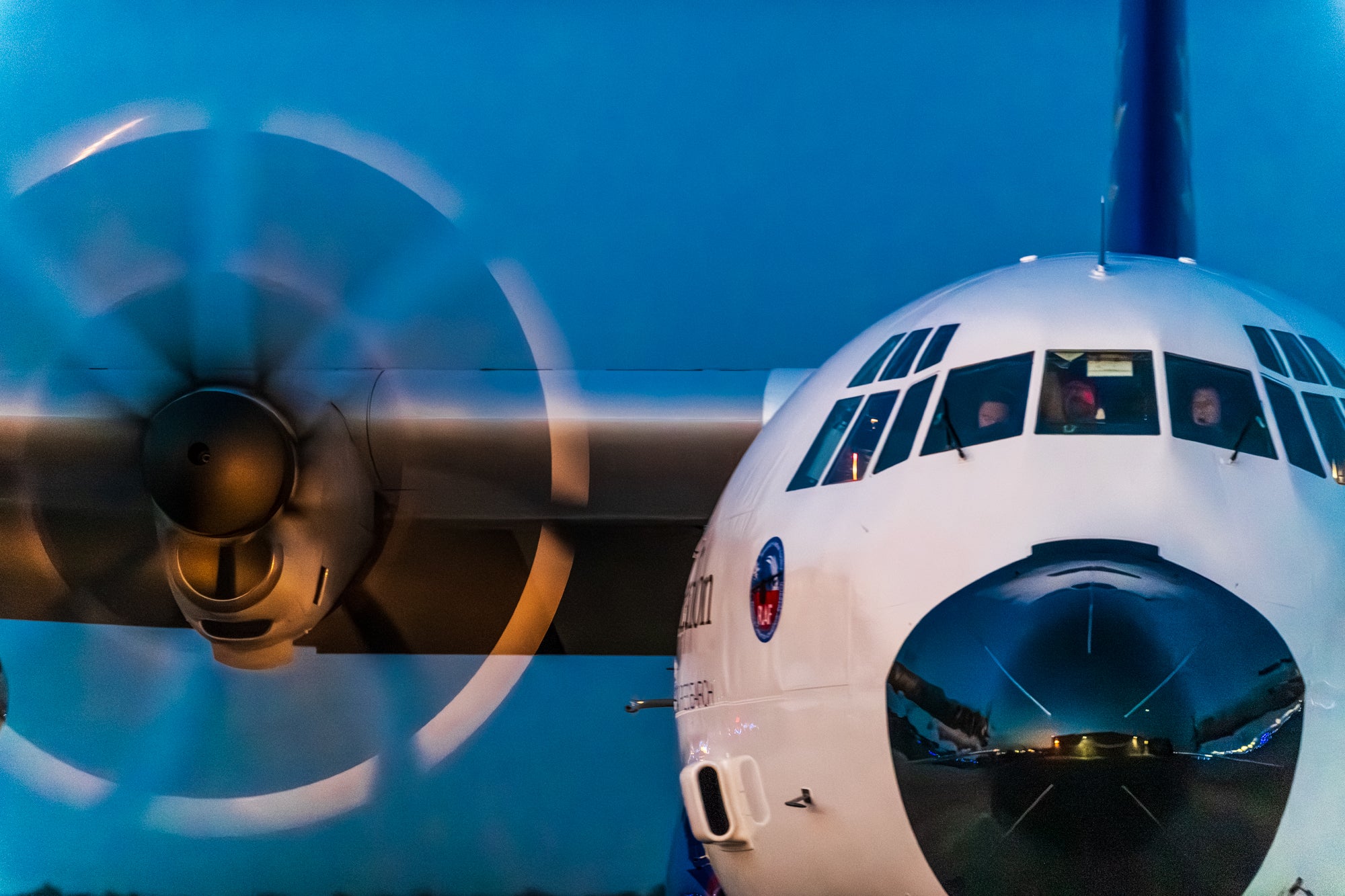
GTGN's nowcasts provide timely information making it possible for pilots to avoid hazardous areas of turbulence. (Image: Chris Rodgers/Code 10 Photography)
| Impact statement: The Graphical Turbulence Guidance Nowcast (GTGN) makes flights safer by enabling pilots to reroute mid-flight and avoid severe and moderate turbulence. |
Turbulence can make a flight unpleasant or, in severe cases, dangerous. A turbulence avoidance tool created by researchers at the U.S. National Science Foundation National Center for Atmospheric Research (NSF NCAR) is making flights safer by providing pilots with information that can help them avoid turbulence in real time.
The tool is called the Graphical Turbulence Guidance Nowcast (GTGN). GTGN provides inflight turbulence analysis every 15 minutes and allows pilots to anticipate features that aren’t always captured by traditional weather forecast models. While other products produce forecasts that are useful for planning flight routes ahead of time, GTGN’s instant short-term forecast data, known as nowcasts, informs pilot decision-making while the flight is enroute.
According to the National Transportation Safety Board, each year turbulence accounts for approximately 75% of all weather-related accidents and incidents. The cost to U.S. airlines due to injuries, cabin and aircraft damage, flight delays, and time lost to inspection and maintenance is substantial, with estimates in the $150 – $500 million per year range.
“GTGN is a product that is geared towards making flying safer. By using this tactical tool, pilots can avoid hazardous areas and ask for reroutes, making flights less eventful by avoiding severe and moderate turbulence,” said Wiebke Deierling, an NSF NCAR scientist who manages the development of a variety of aviation turbulence capabilities including GTGN.
The development of GTGN was funded by the Federal Aviation Administration. GTGN became fully operational a month ago when the National Weather Service’s Aviation Weather Center (AWC) debuted it as an official tool.
GTGN builds on decades of turbulence work at NSF NCAR, with scientists working with the FAA and other aviation stakeholders including individual airlines to keep aircraft safe from turbulence. Scientists previously developed the first version of the GTGN algorithm that uses ground-based Doppler radar data and airborne turbulence reports to detect turbulence within clouds, as well as a short term forecast of the Graphical Turbulence Guidance (GTG) product that provides forecasts of turbulence out to 18 hours across the continental U.S. Such technologies offer far more reliable measurements of turbulence than reports by pilots when they encounter rough air.
The updated GTGN works by combining more ground-based and airborne observations from a variety of sources and at higher horizontal resolution. The system takes information from pilot reports and automated in situ turbulence reports, lightning data, observations from weather stations, and output from NSF NCAR’s Turbulence Detection Algorithm, which estimates turbulence based on radar data.
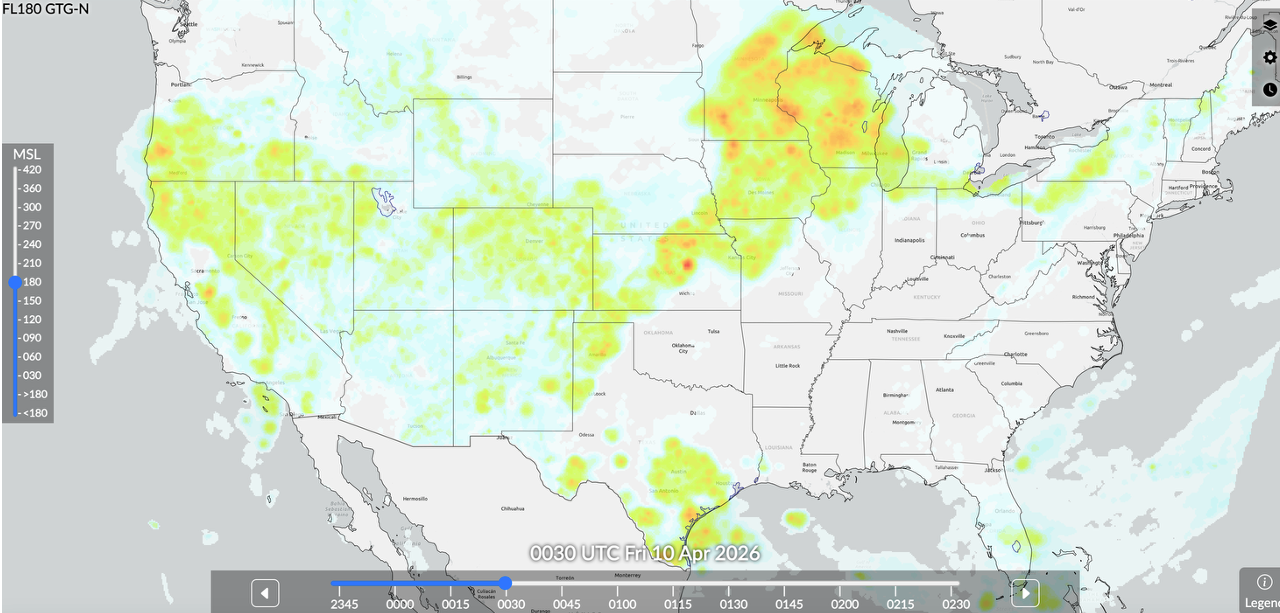
Together, all of this information nudges the turbulence forecasts to be more consistent with observations. All of the observations are merged with a short term high resolution GTG turbulence forecast which is based on NOAA’s High-Resolution Rapid Refresh (HRRR) forecast model output. The end result is a 3D grid that helps users see all sources of turbulence including low level, clear air, mountain wave, and in and near cloud turbulence.
GTGN output is available at 51 separate altitudes above ground, starting 100 feet above ground level and continuing all the way up to 50,000 ft. The horizontal resolution matches that of its base forecast model, the HRRR, of 3 kilometers (about 1.9 miles). This allows smaller features, like individual mountains or thunderstorm cells, to be better captured and accounted for.
Before becoming operational, GTGN underwent extensive evaluation and satisfied the FAA’s Safety Review Management Panel. The FAA coordinated evaluation with a variety of aviation stakeholders, and pilots reported positive experiences using it in the cockpit. Currently, GTGN generates nowcasts only for the continental U.S., but NSF NCAR researchers are working on a global version.
“GTGN has been well received by pilots testing it and we’re excited for it to be available at the Aviation Weather Center and be adopted on more flights,” Deierling said. “This is a great development for the aviation community and anyone who flies on a plane.”
This research is in response to requirements and funding by the Federal Aviation Administration (FAA). The views expressed are those of the authors and do not necessarily represent the official policy or position of the FAA.”