
-
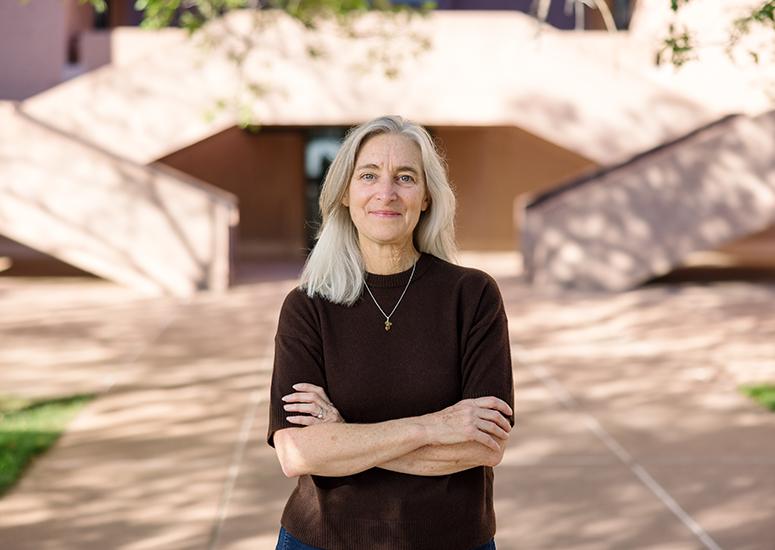
NSF NCAR scientist Marika Holland named a MacArthur Fellow
These prestigious awards are given to extraordinarily talented and creative individuals as an investment in their potential.
- Organization
-
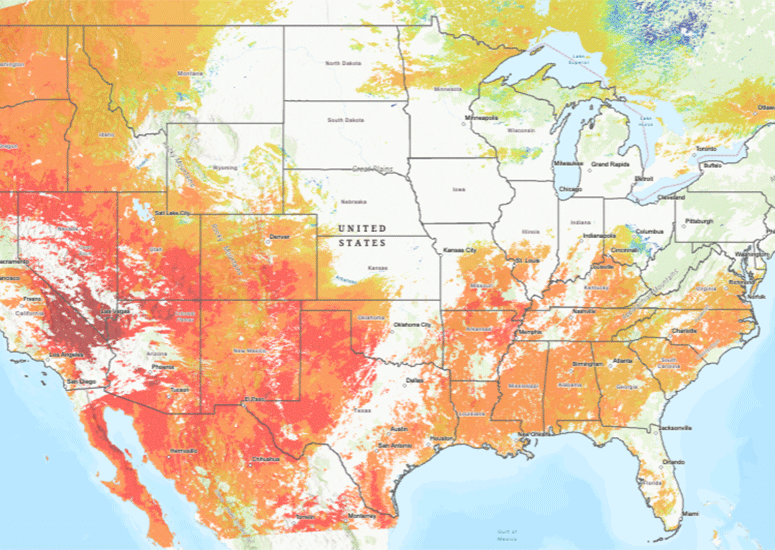
Mapping wildfire risk across the US, day by day
Scientists have produced real-time maps of the moisture content of vegetation across the nation, which can help to identify wildfire risk.
- Data
-
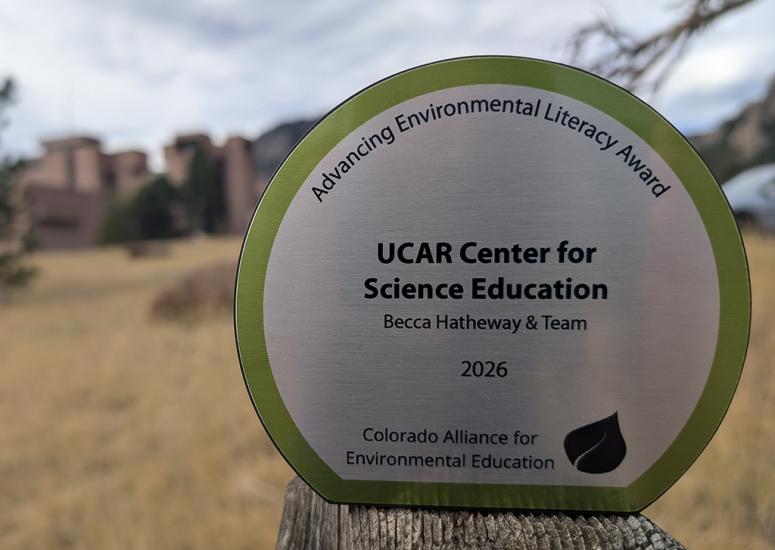
Becca Hatheway and UCAR SciEd recognized for excellence in environmental education
On September 17, the Colorado Alliance for Environmental Education (CAEE) presented Becca Hatheway and the UCAR Center for Science Education (UCAR SciEd) with the 2026 Advancing Environmental Literacy Award. The award acknowledges the outstanding efforts by Hatheway and SciEd to advance environmental education across Colorado and beyond.
- Education + Outreach
-

Hot new dataset focuses on human health
Heat stress is a leading cause of weather-related deaths and can be especially dangerous in cities where phenomena like urban heat islands drive temperatures higher than surrounding rural areas. Now a new dataset developed by the U.S. National Science Foundation National Center for Atmospheric Research (NSF NCAR) aims to provide city governments and health officials with information that could minimize heat impacts on residents.
- Weather
-

Prepare for takeoff into smoother skies
Turbulence can make a flight unpleasant or, in severe cases, dangerous. A turbulence avoidance tool created by researchers at the U.S. National Science Foundation National Center for Atmospheric Research (NSF NCAR) is making flights safer by providing pilots with information that can help them avoid turbulence in real time.
- Weather